
✍️Khalid Rasool
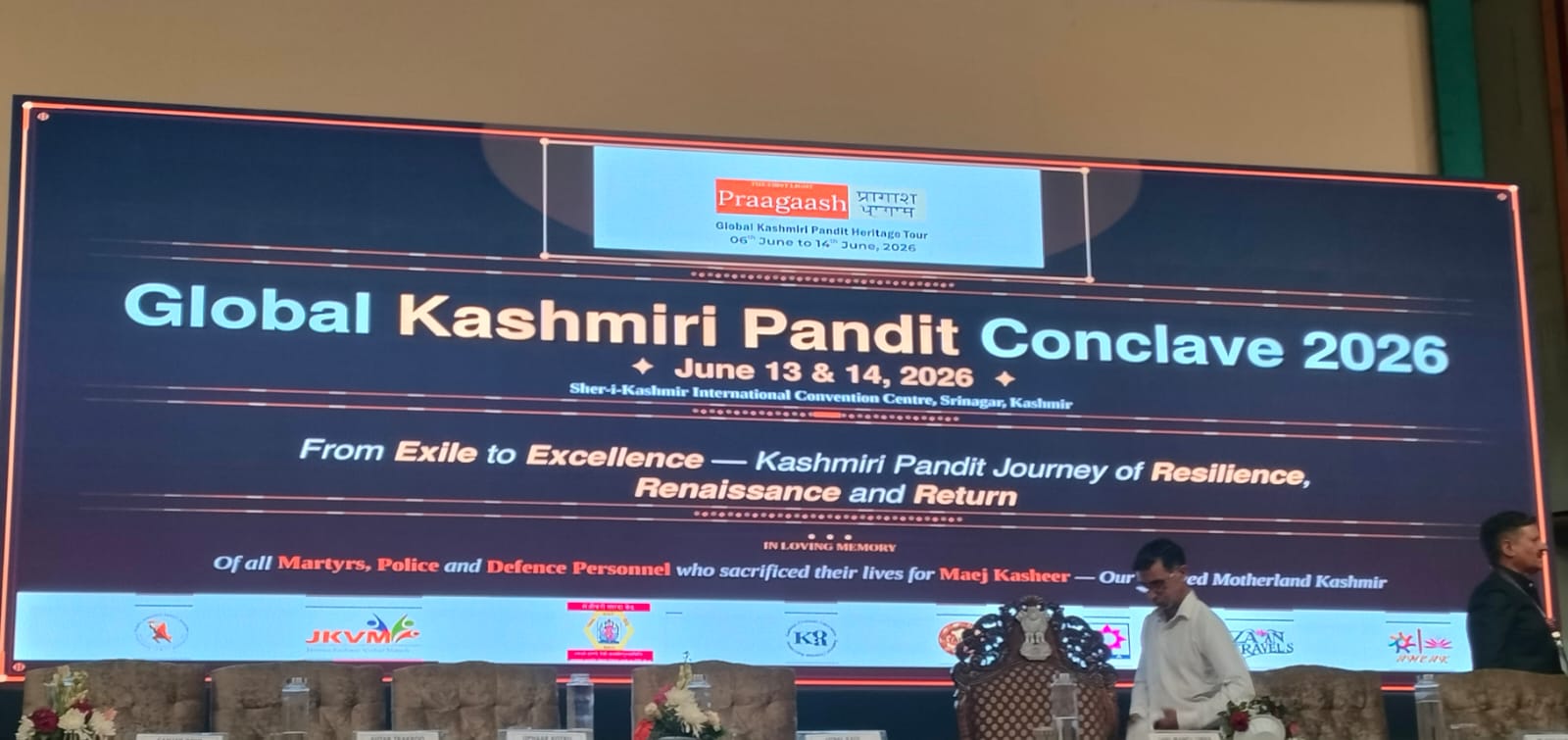
The recently concluded PRAGASH – Kashmiri Pandits Heritage Tour and Conclave, held from 6th to 14th June, was far more than a cultural event. It was a powerful reminder of Kashmir’s enduring spirit, its shared heritage, and the possibility of healing old wounds through dialogue, understanding, and human connection.
The first phase of the programme, from 6th to 12th June, focused on the heritage component of the tour. Kashmiri Pandits from different parts of India and across the world returned to the Valley to reconnect with their roots after decades of separation. For many participants, this was their first visit to their ancestral homeland in nearly thirty-six years.
During the tour, participants visited numerous temples across the Kashmir Valley, including the revered Bhadrakali Temple in Handwara, Shiva Mandir in Tikkar Kupwara, Kheer Bhawani Temple at Tulmulla, and the historic temple at Trehgam. What many visitors witnessed was both reassuring and inspiring: these sacred sites had been preserved and protected over the years, often with the support, care, and goodwill of local Muslim communities.
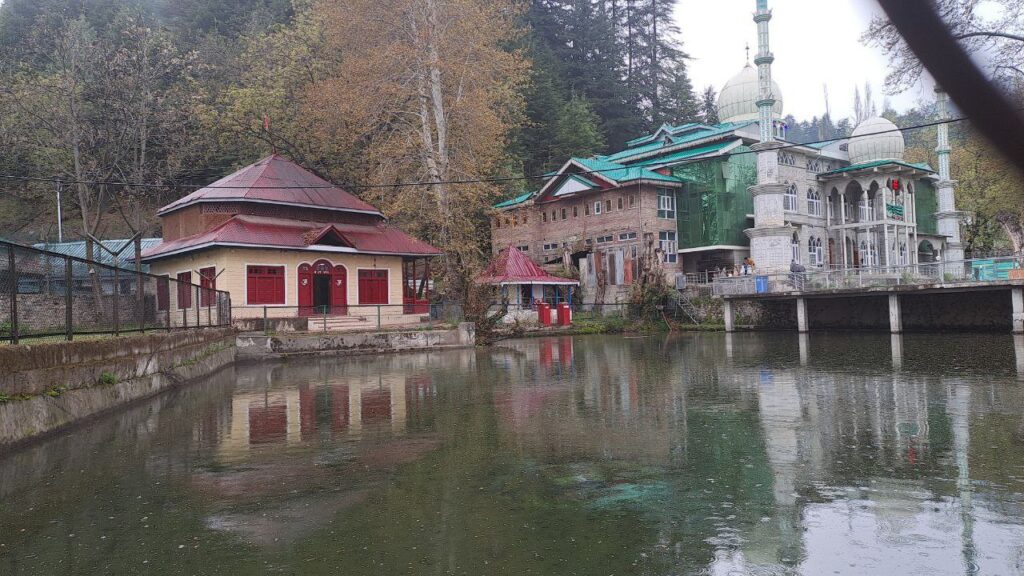
Particularly noteworthy was Trehgam, where a temple and a mosque stand in close proximity, symbolising the essence of Kashmir’s centuries-old tradition of coexistence. Such shared spaces are not merely physical structures; they are living testimonies to the values of mutual respect, communal harmony, and religious pluralism that have long defined Kashmiri society.
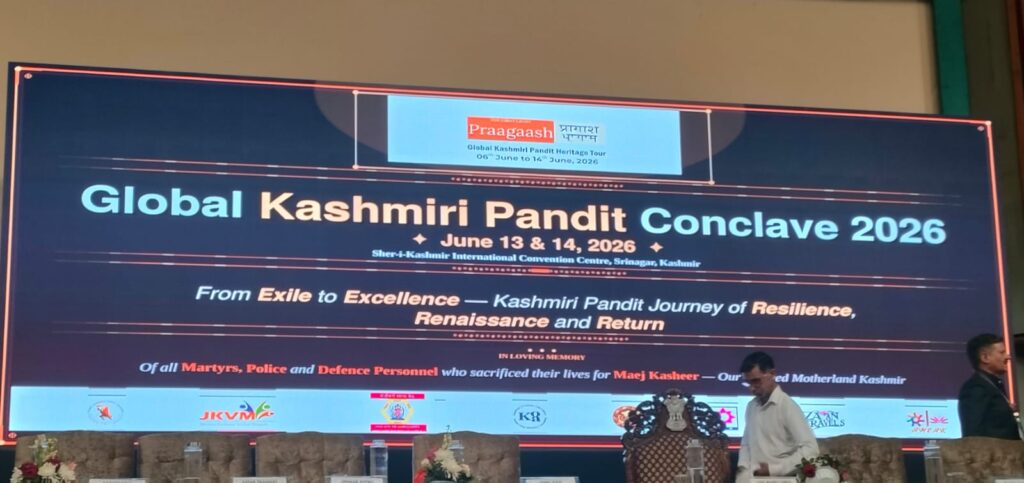
The second phase of PRAGASH, held on 13th and 14th June at the Sher-i-Kashmir International Conference Centre (SKICC), brought together scholars, community leaders, policymakers, and members of the Kashmiri diaspora. The conclave served as a platform for thoughtful reflection on Kashmir’s past, present, and future.
As discussions unfolded, participants acknowledged the immense suffering endured by all communities during the years of conflict. Official data and independent studies indicate that thousands of civilians lost their lives following the onset of militancy in 1989. Among them were Kashmiri Pandits, Muslims, Sikhs, members of the security forces, and countless innocent civilians whose lives were tragically disrupted by violence and instability.
The lessons of history are clear: pain cannot be undone, but it can be transformed into a commitment to build a more inclusive future. The spirit of Kashmiriyat—rooted in compassion, tolerance, and respect for diversity—offers a pathway towards reconciliation and lasting peace.
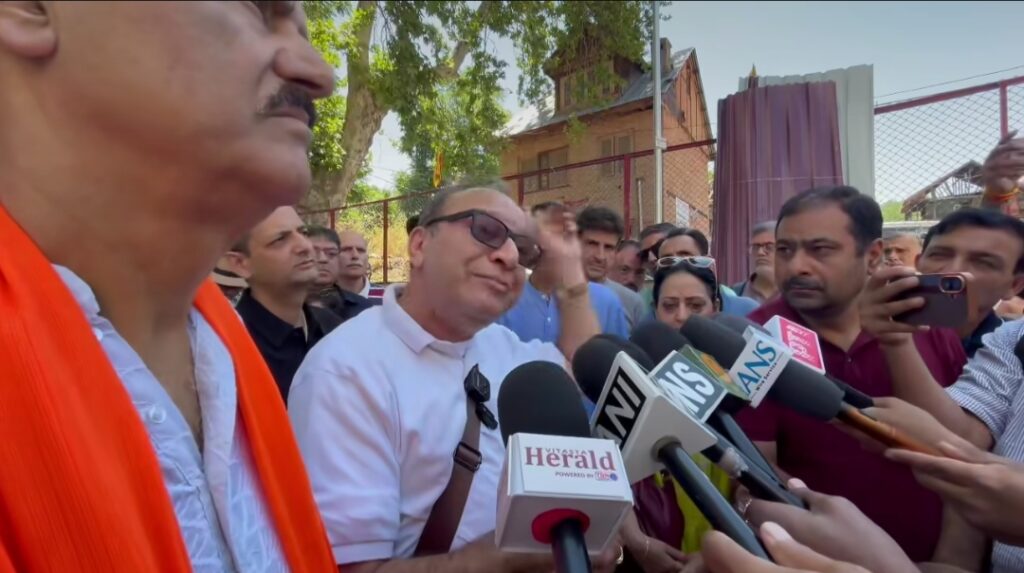
Today, Kashmir stands at an important crossroads. The challenge before its people is not merely to remember the past but to shape a future where every community feels secure, respected, and connected to its homeland. The return of dialogue, cultural engagement, and people-to-people contact can help rebuild trust and strengthen the social fabric that once made Kashmir a model of coexistence.
PRAGASH demonstrated that despite decades of separation, the bonds between people, culture, and homeland remain strong. It showed that Kashmir’s shared heritage belongs to all its communities and that preserving this legacy is a collective responsibility.
As we look ahead, let us embrace the wisdom passed down by our ancestors—those who dreamed of a Kashmir defined not by division but by humanity, not by fear but by understanding, and not by conflict but by peace.
In the words that best capture the spirit of this journey:
“Let us all pull in the same direction so that we do not lose what we are trying to save.”
That shared commitment is the true essence of Kashmiriyat—a vision of love, dignity, coexistence, and hope for generations to come.