
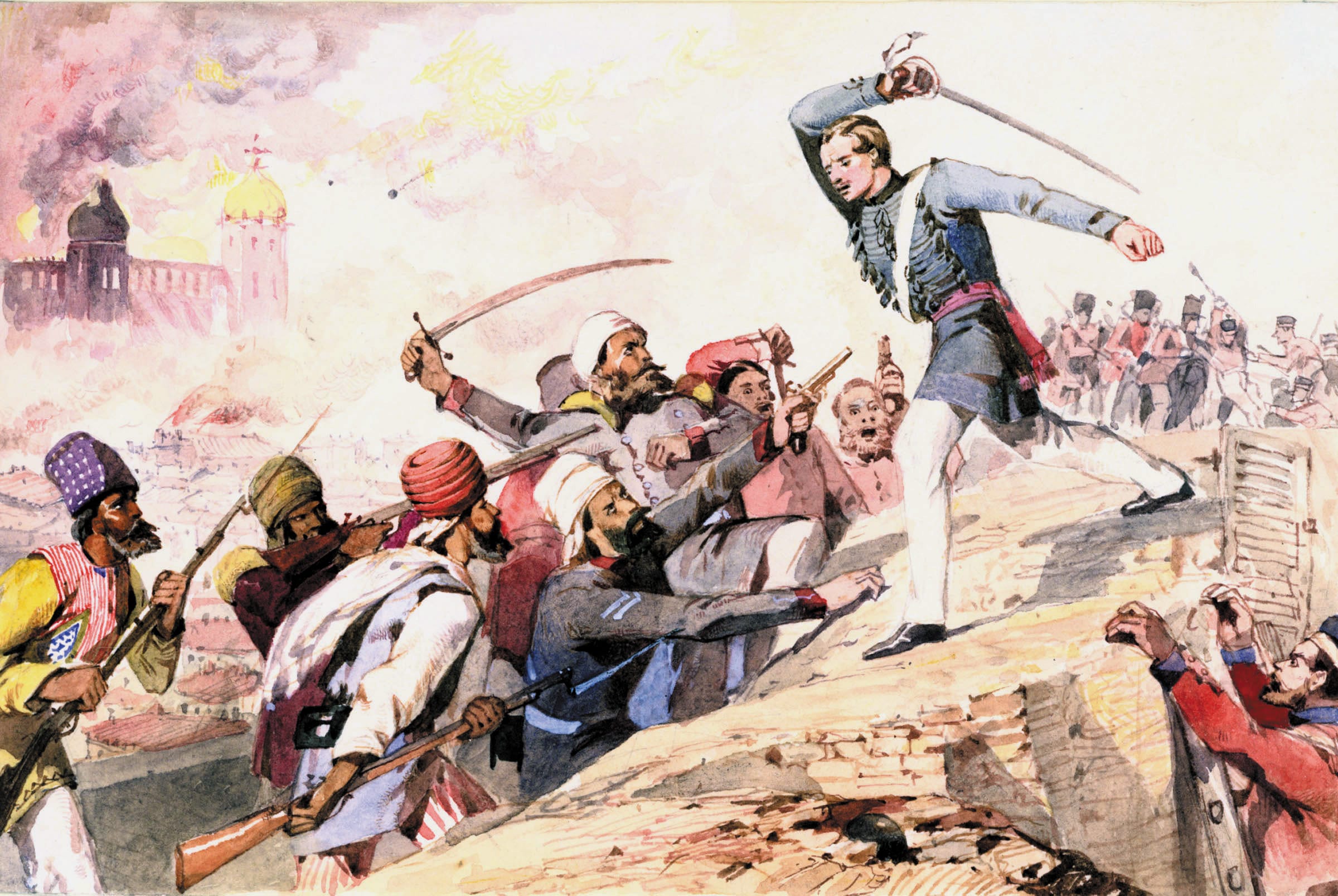
On the evening of 10 May 1857, the struggle launched by Indian Muslim soldiers in Meerut was not just a military uprising, but the beginning of India’s First War of Independence. The most important and emotional part of this great revolution was the 85 soldiers who challenged the British Empire to protect their religious faith and national honour. Among these 85 brave soldiers were 49 Muslim martyrs, whose sacrifice is still remembered today as a shining example of courage, patriotism, and complete devotion to the nation.
In early 1857, the British East India Company introduced the Enfield rifle. A rumour spread that the rifle cartridges were greased with the fat of cows and pigs. Since the cartridges had to be bitten open before use, both Hindu and Muslim soldiers believed this was a British conspiracy to hurt their religious faith and force them towards Christianity.
Not only this, but several other British actions also added fuel to the fire. Many people believed that animal bone powder had been mixed into the flour sold in markets and that the water in wells had been polluted. The mysterious distribution of “chapatis” in villages across North India was also seen as a sign that a major change was coming.
24 April 1857: The Historic Morning of Self-Respect
Tension in the Meerut cantonment reached its peak when the 3rd Regiment of Regular Cavalry was called for a parade to test the new cartridges. Colonel Carmichael Smith tried to convince the soldiers, but their distrust was deep.
Out of the 90 soldiers present at the parade, 85 openly refused to touch the cartridges. This group of heroes reflected the shared heritage of Indian society: among them were 49 Muslims and 36 Hindus. British historians of that time recorded with surprise and fear that Hindus and Muslims were completely united against British rule. These soldiers showed remarkable unity and courage.
9 May: Public Humiliation and Harsh Punishment
The 85 soldiers who refused the cartridges were tried in a military court and sentenced to ten years of hard imprisonment. On the morning of 9 May, a painful and humiliating scene was witnessed at the Meerut parade ground. In front of all the European and Indian regiments, the uniforms of these brave soldiers were removed and they were chained in heavy iron shackles.
This process continued for nearly two hours while their fellow soldiers watched with anger and sorrow. After the punishment, they were sent to the “New Jail” located on the Garhmukteshwar Road.
10 May 1857: The Beginning of the Revolution
The humiliation of 9 May filled the Indian soldiers in Meerut with anger and the desire for revenge. On the evening of 10 May, while the European soldiers were preparing for a church parade at St. John’s Church, the Indian regiments — the 11th and 20th Native Infantry and the 3rd Cavalry — launched the revolution.
The soldiers first rushed towards the New Jail. They broke open the prison gates and freed their 85 imprisoned comrades, along with nearly 800 to 1200 other prisoners. During this time, Dhan Singh Gurjar Kotwal emerged as a revolutionary leader and raised the slogan “Kill the Firangi” (Death to the British rule), leading the movement in the Sadar Bazaar and cantonment area.
After freeing the prisoners, the soldiers made a strategic decision — “March to Delhi.” They moved towards Delhi during the night so that the last Mughal emperor, Bahadur Shah Zafar, could be declared the ruler of India and the struggle could gain a political direction.
After being freed from jail, all these 85 brave soldiers sacrificed their lives for the freedom of the country. Their role in the First War of Independence of 1857 and their final sacrifice remain both glorious and heartbreaking.
Shaheed Smarak and the Memory of the Revolution
The Shaheed Smarak, built in memory of this struggle, is the main memorial connected with the revolution. It was constructed in 1957 to mark 100 years of the movement. A 100-foot-high Ashoka Pillar stands there, and an eternal flame burns in the complex. The names of many revolutionaries who sacrificed their lives for freedom are written there.
Inside the Shaheed Smarak complex is India’s first museum specially dedicated to the 1857 Revolution. In 2022, the Central and State governments renovated and beautified it. Rare documents, paintings, and stone inscriptions related to the revolution are displayed there to present the story of the struggle.
The “New Jail”, where the 85 soldiers were imprisoned, was located near present-day Victoria Park. Today, the original structure of the jail no longer exists, but the area is part of a heritage walk that introduces visitors to the important places connected with the revolution.
Legacy of the 85 Soldiers
The 85 soldiers of the 1857 freedom struggle is not limited to the pages of history. They remain immortal symbols of patriotism, courage, and united resistance against foreign rule. Among them were 49 Muslim martyrs whose sacrifice gave new strength and inspiration to India’s freedom movement. Their refusal on 24 April and their sacrifice after 10 May became the spark that lit the flame of independence across the country. Today, the memorials and museums of Meerut continue to tell the world the Saga of the courage, sacrifice, and bravery of these great heroes.